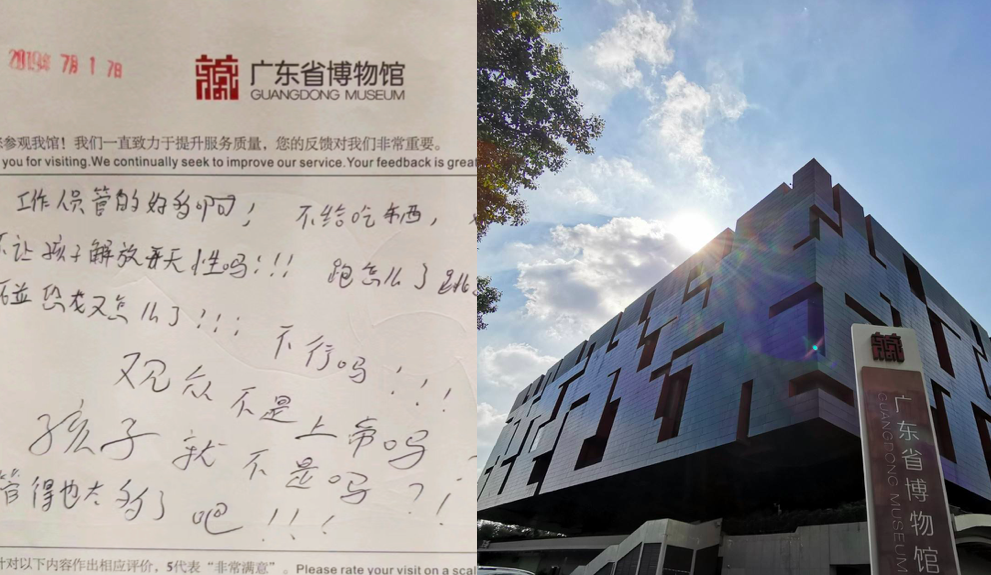

“Don’t touch the art” is one of the most basic and broadly understood rules of visiting museums. Unfortunately, it’s a rule that not everyone respects. This was demonstrated by a recent complaint letter that was written by an angry visitor to Guangdong Museum, a public institute in Southern China.
“What’s wrong with running, jumping, and touching the ‘dinosaurs’? Shouldn’t kids be free in museums?” A parent wrote this complaint letter in the museum guest book. The anonymous angry visitor accused the museum staff of being “too overreaching” when maintaining the visiting environment.
The museum has adopted a firm attitude too. They have replied on Weibo, the Chinese version of Twitter, that “visitors must observe certain etiquette in museums to show respect to others… museum manners need to be taught to children”. A museum staff member also remarked online, “An increasing number of parents take their kids to museums during school holidays, but some ‘young culprits’ are literally turning the institute into total chaos.”
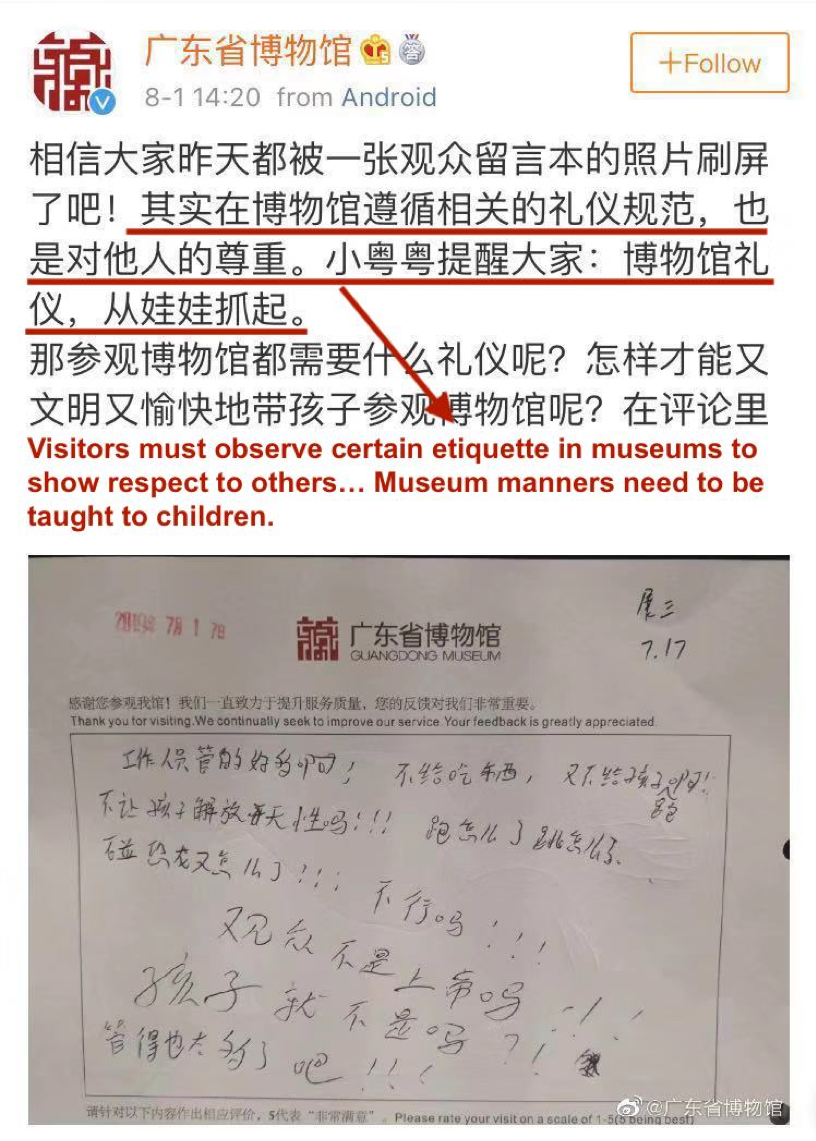
▲Guangdong Museum posted and replied the anonymous angry complaint on social media.
The intense confrontation immediately led to a heated discussion within the art and culture circle. According to Beijing News, almost every important domestic museum has suffered from disruption caused by children. This has included making noise, throwing garbage, and damaging exhibits.
A famous example of this was recorded by a surveillance video at the Shanghai Museum of Glass. The 2016 footage showed two kids ducking under the barrier and rough housing close to Shelly Xue’s wall-mounted glass sculpture Angel is Waiting. Instead of pulling the kids away from the artwork, the two adults simply stood there, taking photos of the children on their phones. The children proceeded to pull on the artwork until the delicate glass inevitably broke.
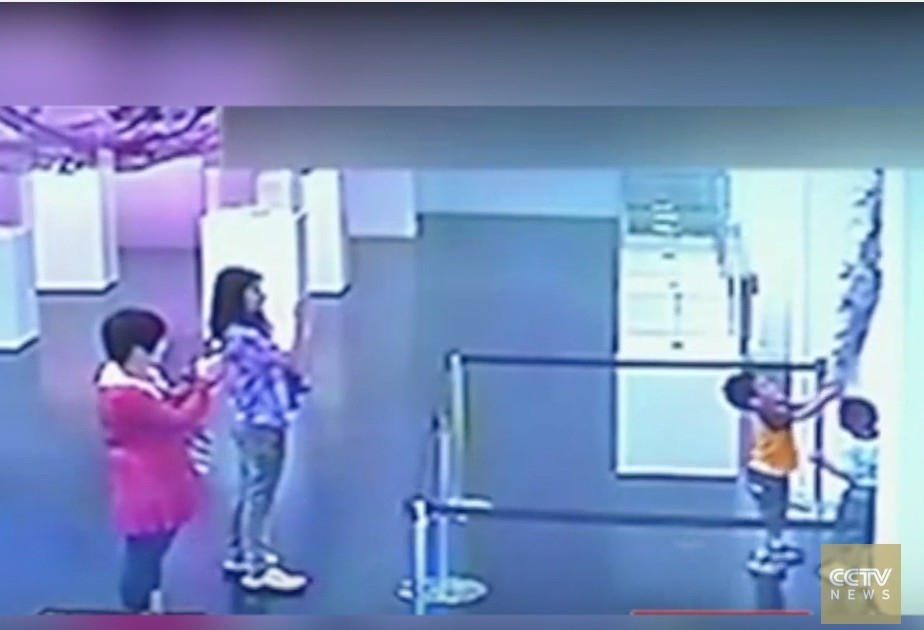
▲The adults pulled out their smartphones to record the kids vandalizing the art. Photo: Film still via YouTube
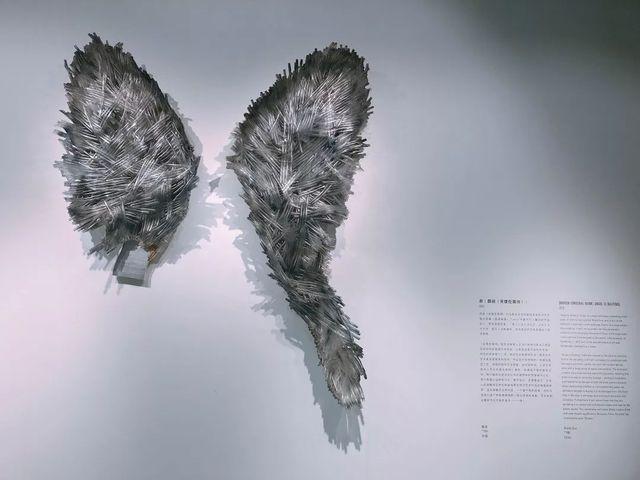
▲Shelly Xue’s Angel is Waiting, renamed Broken, after it was damaged by visitor at the Shanghai Museum of Glass in the year 2016
Similar incidents occurred at Wuhan Natural Museum last month. The institute revealed on Weibo that some primary school students broke the display box and tore up the wings of a butterfly specimen.
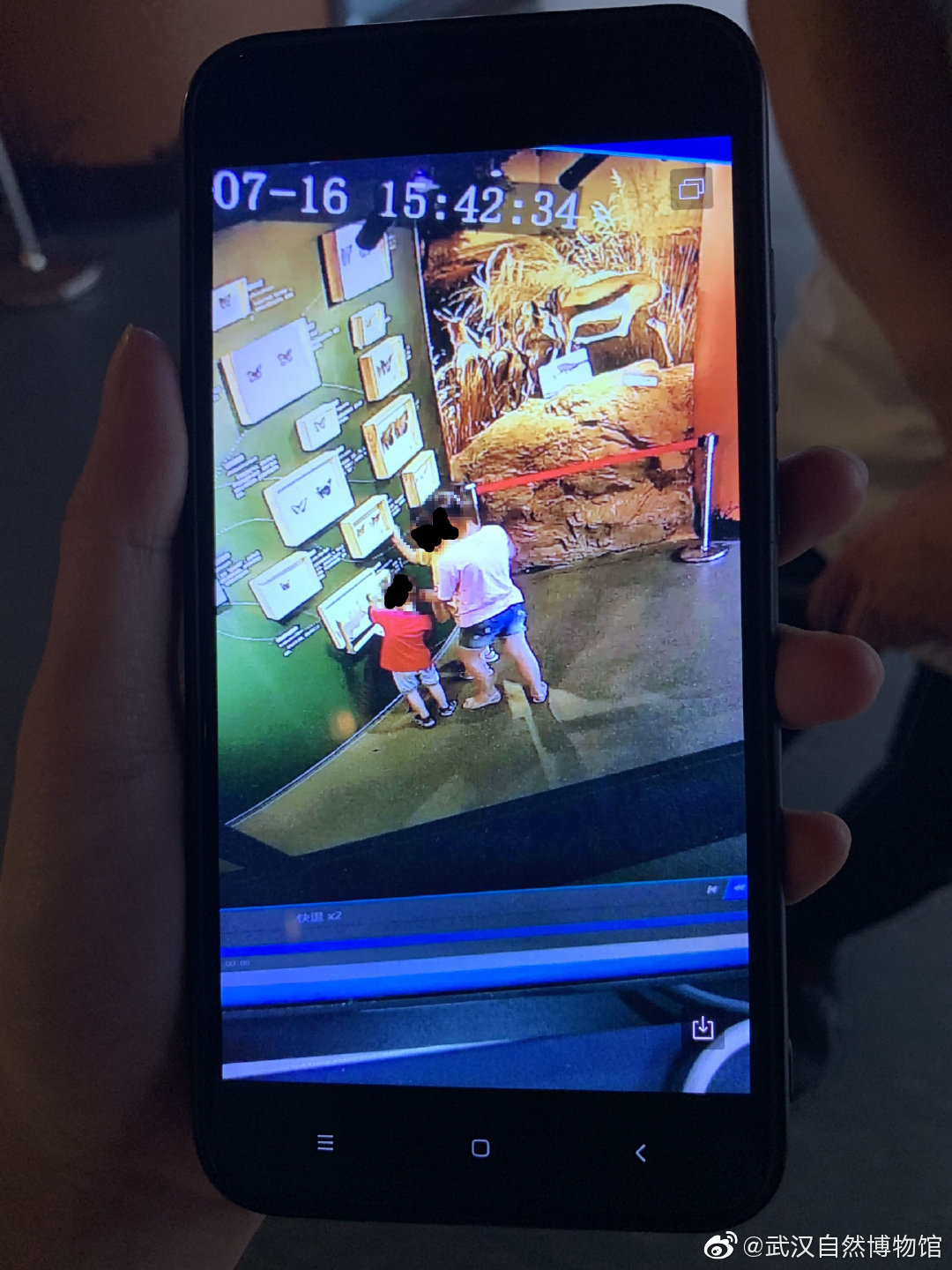
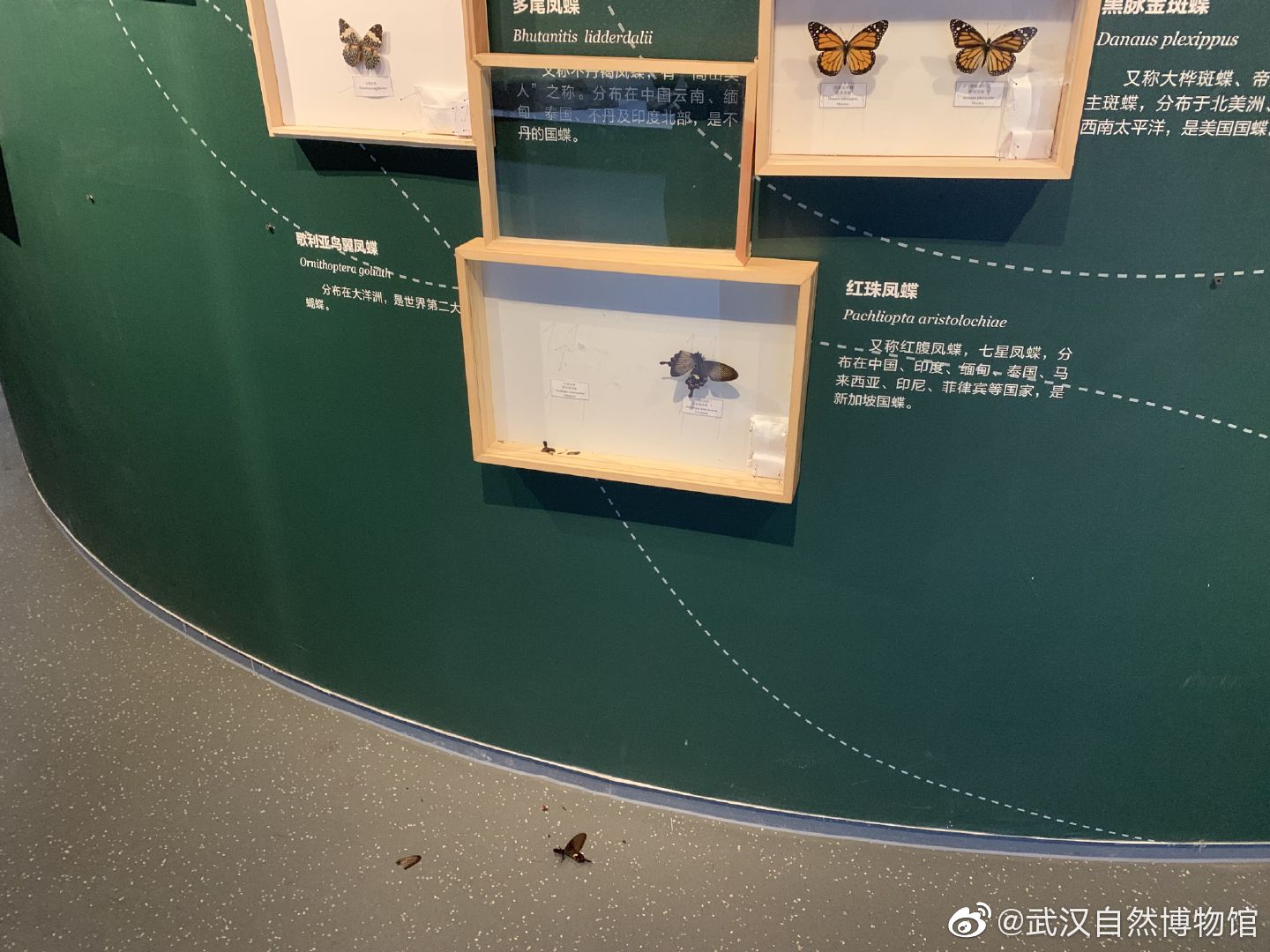
▲Kids broke the display box and tore up the wings of a butterfly specimen. Photo: posted by Wuhan Natural Museum on Weibo
People’s Daily commented pungently last Saturday, “Such ignorant complaints suddenly awoke the long repressed public resentment against certain phenomena. Regarding children’s misbehavior, we have only been under-, not overreacting in this country.” Although the national newspaper’s opinion towards the lack of public manners seemed a bit harsh, it received over 158,000 likes on Weibo. People’s Daily even initiated a vote asking netizens whether museums should allow kids to jump and run in the exhibition space, to which 134,000 people voted for NO, accounting for 93.58% of all participants.
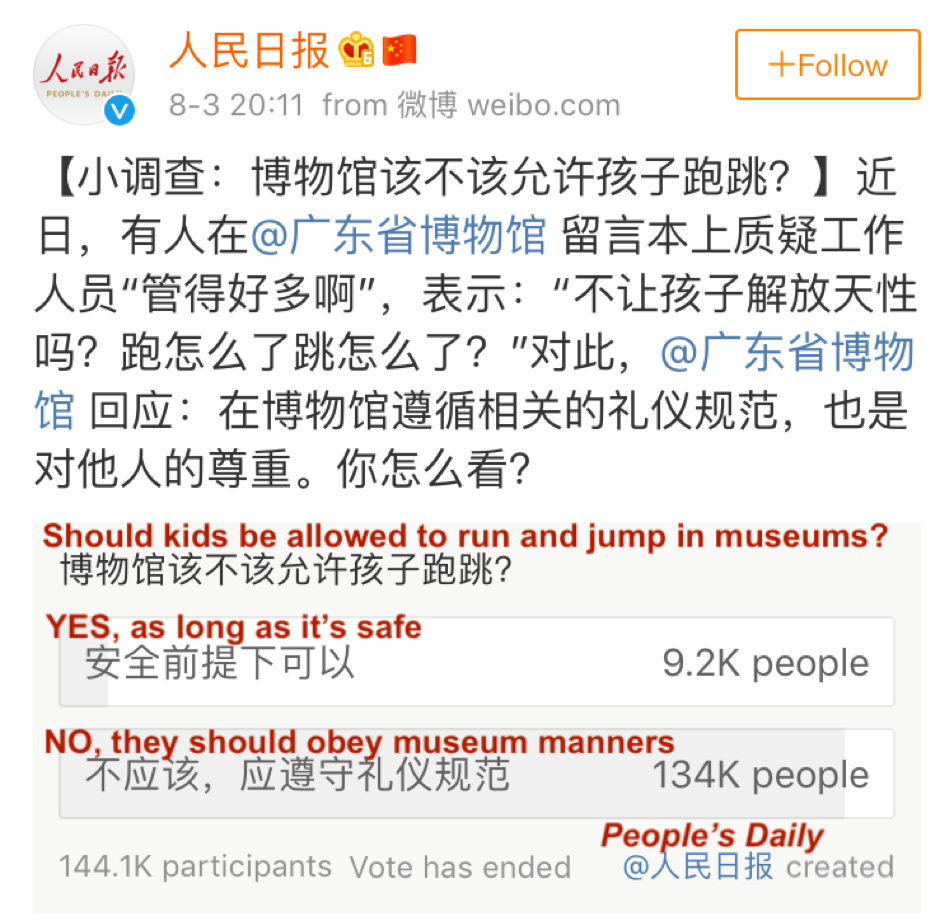
▲People’s Daily initiated the vote on social media.
Beijing Daily, on the other hand, stressed that adults should take more responsibility of controlling their children’s behavior in public. According to this report, the content of the letter showed that “the complainer knew little about DOs and DON’Ts in museums” - “If a teacher is allowed to prevent certain behavior in a classroom - a situation that parents are more familiar with-the staff should be allowed to prevent certain behavior in museums. But museums, to some, are common public spaces like parks, where kids can be set totally free.”
Indeed, for earlier generations, visiting museums wasn’t fashionable in China. As a matter of fact, more than 3/4 of the museums in this country were only built in the past 10 years. According to Shanghai’s Social Organization Public Service Platform, there are currently 91 registered private art museums in Shanghai, among which, 80 were built after the year 2010.
Therefore, the fundamental issue here is: many tend to view museums as a place of entertainment instead of public education. Museum manners come from a culture that needs to be nurtured by all community members together.